The Ultimate Guide to Garage Floor Coatings in North Carolina


If you've ever walked across your garage and noticed dust settling into hairline cracks, tire marks that won't scrub away, or a dull gray floor that you can’t get to look clean no matter how much you sweep it, you, along with many other homeowners across Raleigh and the Greater Triangle Area, have discovered that bare concrete isn't built to keep up with daily life. Between the region's humidity, temperature swings, and the constant wear from vehicles and foot traffic, an unprotected garage floor is fighting a losing battle.
The good news is that today's garage floor coating technology has come a long way. At Anderson Painting, we've spent years helping Raleigh and Triangle-area property owners transform tired, cracked concrete into durable, beautiful floors that can handle whatever life throws at them. This guide brings together everything you need to know about garage floor coatings, from the basic categories available to the specific system we recommend most and why. Whether you're planning a simple refresh or a true showroom garage, consider this your complete roadmap.
Coatings vs. Coverings: Understanding Your Garage Floor Options
Before comparing specific products, it helps to understand the two broad categories of garage floor protection.
Coatings are liquid-applied products that bond directly to your concrete and cure into a permanent (or semi-permanent) layer that seals the surface. Epoxy, polyurea, polyaspartic, and urethane systems all fall into this category.
Coverings, on the other hand, are physical materials that sit on top of your existing floor rather than bonding to it. This includes interlocking tiles made from PVC, rubber, or wood composite. Coverings can be a reasonable short-term or budget-friendly fix, and they're easy to remove or replace. However, they don't offer the same level of protection as a properly cured coating, since moisture, chemicals, and debris can still work their way underneath.
For most Triangle-area garages, especially those housing vehicles or serving double duty as workspaces, a bonded coating delivers far more value over time than a covering alone.
Why Standard Epoxy Often Falls Short
Epoxy is the name most homeowners recognize when they start researching garage floor coatings, and it's easy to see why. It's widely available, relatively affordable, and comes in a range of colors and finishes. Epoxy coatings generally fall into three types: 100% solids, water-based, and solvent-based, with each offering a different balance of thickness, durability, and cost.
Here's the catch: even a well-installed, well-maintained epoxy coating typically needs resurfacing every three to five years. Some formulations may last closer to a decade under light use, but for an active garage that sees regular vehicle traffic, that lifespan shrinks considerably. Epoxy is also more rigid than newer alternatives, which makes it more prone to cracking as concrete naturally expands and contracts with temperature changes. Installation timelines can run long, too, often taking several days to a few weeks between application and full cure before the floor can safely hold vehicle weight.
If you're looking for a floor you can install once and largely forget about, it's worth understanding the alternative that's changed the game for garage flooring: polyurea.
Penntek Polyurea: The Gold Standard for North Carolina Garages
At Anderson Painting, we've built a solid reputation as Penntek Polyurea installers and have seen firsthand how this system outperforms traditional coatings across nearly every category that matters to homeowners and business owners.
What makes polyurea different? Polyurea is a synthetic, flexible material that bonds tightly to concrete while remaining far more elastic than epoxy. That flexibility means the coating moves with your slab as temperatures shift and the ground settles, dramatically reducing the risk of cracking over time. Penntek's systems combine polyurea with polyaspartic topcoats to create a multi-layer floor built to last.
Polyurea coatings are durable. A properly installed Penntek system resists chemicals, motor oil, moisture, abrasion, impact, and UV exposure. Where epoxy needs resurfacing every few years, Penntek polyurea coatings are engineered to perform for 15 years or more before major restoration is needed, and many installations continue looking sharp well beyond that with basic care. Residential Penntek installations come backed by a 15-year product warranty, giving Triangle-area homeowners real peace of mind.
These coatings are fast to install, fast to use. One of the biggest advantages of polyurea is speed. A Penntek system can typically be installed in a single day by trained professionals like our Anderson Painting team. The coating dries to the touch in as little as 20 minutes and can generally be walked on in around six hours, a fraction of the multi-day cure times epoxy often requires. That means less disruption to your household or business operations.
Here's where low maintenance meets high performance. The smooth, dense surface created by a Penntek coating resists staining and makes cleanup dramatically easier. Spills wipe away before they can soak in, and dust or dirt sweeps off with minimal effort, which is a meaningful difference for anyone tired of sweeping and re-sweeping a porous concrete floor.
It's also environmentally conscious. Penntek coatings are 100% solvent-free, meaning there are no harmful VOC fumes to worry about during or after installation, an important consideration for garages that are attached to living spaces.
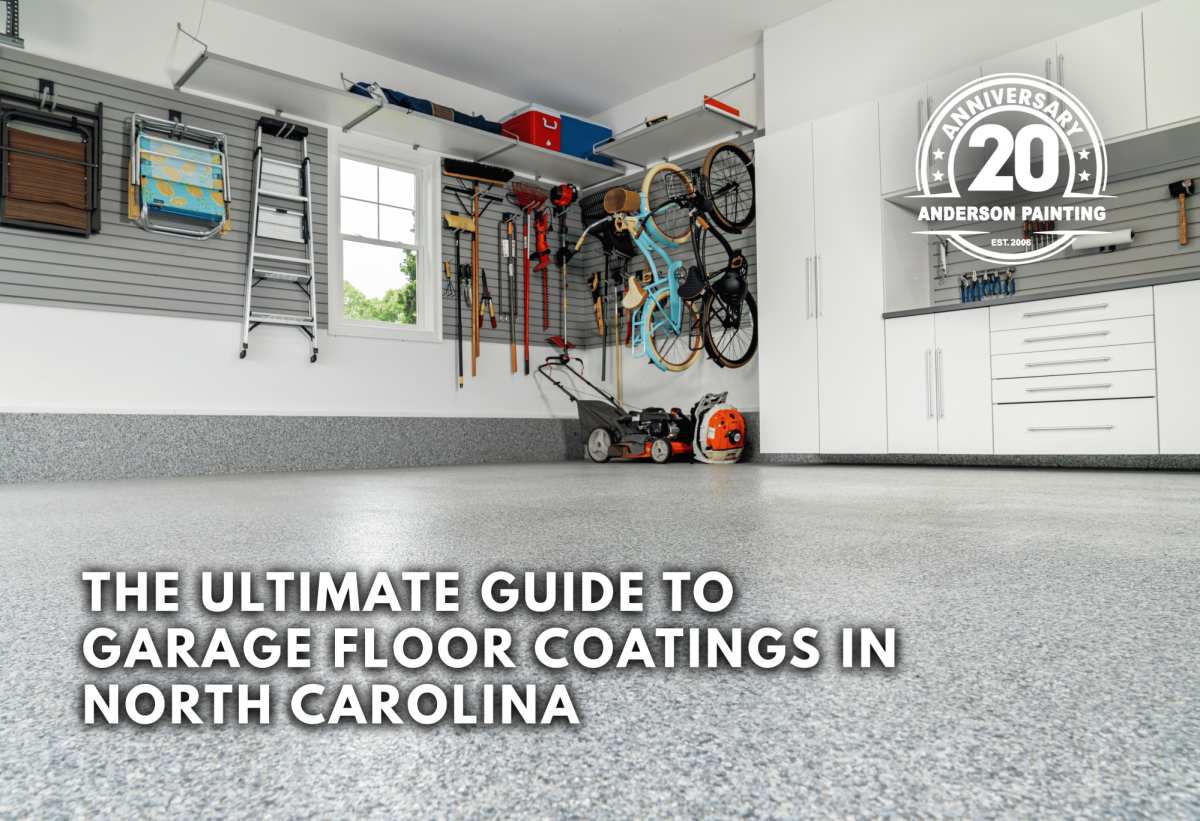
Their style options rival a showroom. Penntek's systems aren't one-size-fits-all. Homeowners can choose from solid color finishes, metallic effects, and the popular Chip System, which layers a polyurea base with decorative vinyl flakes and a protective polyaspartic topcoat. The result is a durable, slip-resistant surface with genuine showroom appeal.
Given all of this, it's no surprise that Anderson Painting and our clients who’ve had their garage floors resurfaced by our team recommend Penntek polyurea as the leading garage floor coating solution for Raleigh and Triangle-area homes and businesses.
Signs Your Current Garage Floor Coating Needs Attention
Standard floor coatings can begin to show signs of wear and tear. Keep an eye out for the following:
Surface cracking. Small cracks may seem minor, but they give moisture and debris a foothold that leads to bigger issues down the road.
Uneven or bumpy areas. A properly installed and maintained coating should provide a smooth, level surface. Bumps, divots, or an uneven feel underfoot often signal that the coating has failed in that area or that the concrete beneath it has shifted.
Persistent moisture or bubbling. Occasional dampness is normal, but consistent moisture intrusion, along with bubbling, peeling, or discoloration, usually points to a failed seal or a vapor issue beneath the slab that needs professional attention.
Fading color or lost sheen. Coatings protect your floor and keep it looking sharp. If cleaning no longer restores the shine or the color has visibly dulled, it's a sign the layer has worn through.
If your current floor shows any of these signs, it may be time to call in the professionals.
Choosing the Right Coating and Contractor for Your Garage
With the options laid out, the next step is matching a solution to your specific needs. A few factors worth weighing:
How you use your garage. A space that mainly houses light vehicles and storage has different demands than a garage that doubles as a workshop, hosts heavy-duty trucks, or sees daily foot traffic. Either way, you can’t go wrong with polyurea's durability.
Your aesthetic goals. If you're aiming for a true showroom look, systems like Penntek's Chip System offer customization that basic epoxy can't match.
Timeline and budget. Polyurea costs more upfront than basic epoxy, but its longer lifespan and lower maintenance needs typically make it the more economical choice over the life of the floor.
The contractor you hire. The material matters, but so does the installer. Before hiring a garage floor coating contractor, ask about their licensing and insurance, their experience with the specific system you're considering, and whether they can show examples of completed work. A reputable contractor will walk you through cost breakdowns for labor and materials and give you an honest estimate of the project timeline.
At Anderson Painting, we start every project with a conversation about how you use your space and what you want it to become, then guide you toward the coating system that fits both your goals and your budget.
Unlocking Your Garage’s Full Potential
A high-quality floor coating opens up many possibilities for how you use the space. Many Triangle-area homeowners are turning underused garages into entertainment areas, home gyms, workshops, or hobby rooms. A sealed, polyurea-coated floor stands up to spills and foot traffic without the constant upkeep bare concrete demands, while reflective, glossy finishes help brighten what is often one of the blandest rooms in the house.
The same principles apply beyond the garage itself. Patios, basements, and other concrete surfaces around your property benefit from the same kind of professional-grade coating, protecting your investment and improving curb appeal in one project.
Upgrade your residential or commercial property with Penntek Concrete Coatings, and work with the team that can do it all. Contact Anderson Painting for your free estimate.