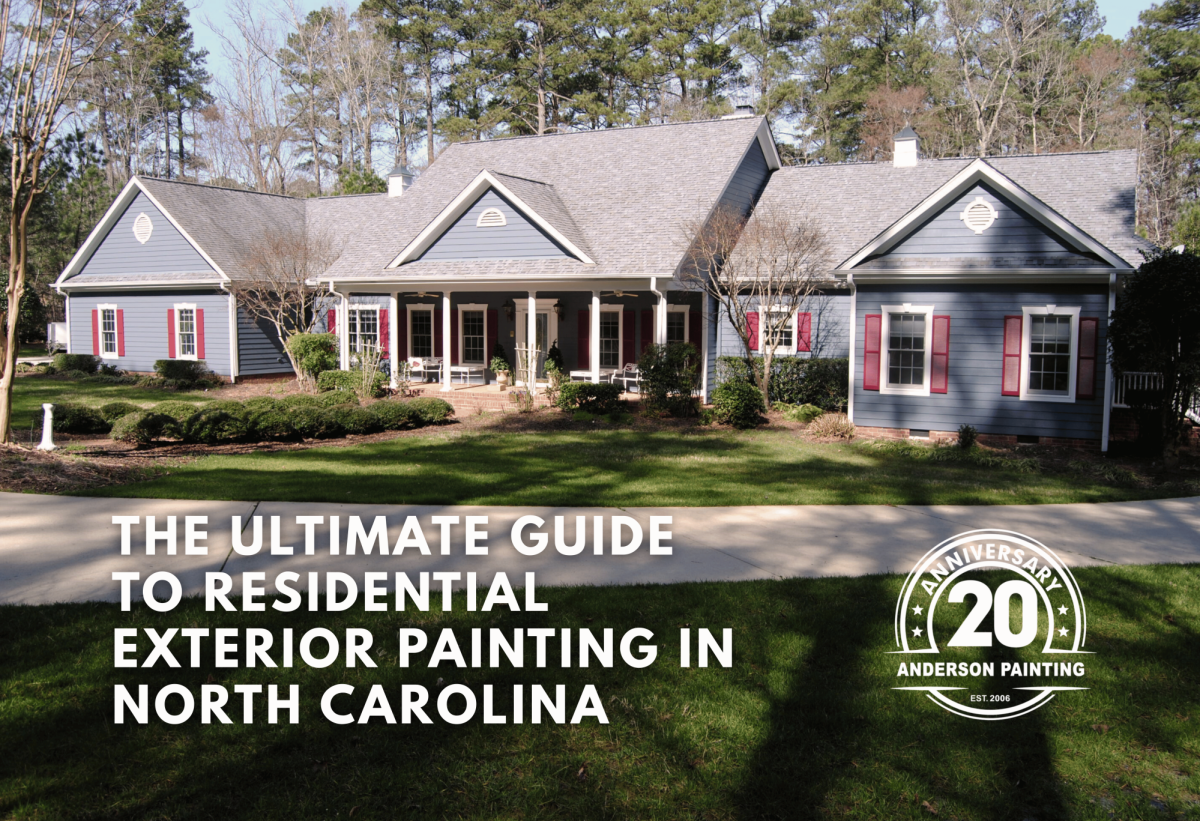
The Ultimate Guide to Residential Exterior Painting in North Carolina


Homes across North Carolina can take a real beating season after season. High humidity, intense summer sun, strong UV exposure, and seasonal storms can all take their toll on your home’s exterior paint. Over time, coatings that have endured years of exposure can begin to fail, leaving surfaces vulnerable to moisture, mold growth, wood rot, and water damage. From subtle fading to more obvious peeling and blistering, these signs usually indicate the surface needs more than a quick coat. It needs a comprehensive refresh.
After twenty years of serving Raleigh and the Greater Triangle Area, we at Anderson Painting have seen it all—beautiful homes that range from needing some outdoor touch-ups after a decade to requiring a major overhaul that involves thoughtful color selection, careful pressure washing, and professional exterior painting from top to bottom (including trim, doors, and other features).
No matter the particular project specifications, residential exterior painting projects require the right combination of preparation, timing, and execution. Tackling this on your own is not advised, as it can be dangerous, time-consuming, and riddled with potential mistakes (wrong colors, lack of materials, poor application or painting conditions, etc.). We’ve put together this ultimate guide to residential painting in North Carolina to help our customers and potential customers understand how much goes into these projects, so they’re equipped to plan properly and find the right contractor for their goals.
In this guide, you’ll discover:
The best times to paint your home’s exterior in NC.
How long exterior paint typically lasts in NC.
The proper steps to take for a durable exterior painting project.
How to safely deal with lead paint in older homes.
Tips for painting different exterior materials (wood, brick, etc.).
When Is the Best Time to Paint Your North Carolina Home’s Exterior?
The best time to paint your home’s exterior is when weather conditions allow coatings to cure properly and maintain long-term adhesion. April, May, September, and October are typically ideal months. October is often a particular sweet spot because cooler nights and mild daytime temperatures help paint set evenly. The long days of summer provide more time for painters to work, but the accompanying high temperatures can lead to exhaustion and hinder the paint’s drying process. Winter is better for interior painting projects, where conditions can be controlled.
Many homeowners also prefer completing exterior improvements before the holidays. During these times of year, lower humidity helps prevent blistering or peeling while coatings cure properly. Exterior painting can also take place in November, early December, February, and March, though these months require careful planning around fluctuating temperatures, rain, and the start of heavy pollen season in spring.
In general, exterior paint performs best when:
Temperatures remain between 50°F and 85°F.
Humidity levels are moderate.
Surfaces are fully dry and stable.
Rain is not expected during the application or dry time.
Wind conditions are minimal, particularly for spraying.
When you partner with Anderson Painting, we evaluate the condition of your home's exterior and help determine whether it still has a year or two of life remaining or whether it's time to plan a refresh. We also schedule projects based on weather forecasts to ensure the finish performs well for years to come.
How Long Does Exterior Paint Last in the NC Climate?
How long exterior paint lasts in North Carolina depends on several factors, including paint quality, siding material, sun exposure, and the thoroughness of surface preparation before painting.
Hot summers and persistent humidity can encourage mold and mildew growth, especially in shaded areas of the home. At the same time, prolonged UV exposure gradually breaks down paint pigments and binders, leading to fading and surface deterioration. If paint is applied to damp or poorly prepared surfaces, bubbling or premature peeling may occur.
Siding material also plays a role. Wood siding generally requires repainting every three to seven years because it expands and contracts with changes in temperature and moisture levels. Fiber cement siding is far more stable and can often hold paint for ten years or longer. Aluminum and vinyl surfaces typically fall somewhere in between.
Homeowners can often recognize early warning signs that repainting may be necessary. Peeling or bubbling paint often indicates trapped moisture beneath the coating. Fading suggests prolonged UV exposure. Chalking (a powdery residue on the surface) signals that the paint’s binding agents are beginning to break down. Mildew growth or soft, damaged wood should also be addressed promptly.
The most effective way to extend the life of an exterior paint job is through proper preparation and quality materials. Pressure washing, removal of failing coatings, sealing exposed wood, and careful caulking all help create a stable surface for new paint. When paired with durable exterior coatings and professional application methods, your home’s exterior stays protected and attractive for years to come.
How Raleigh's Climate Affects Exterior Paint Performance
Location plays a major role in how exterior paint performs across North Carolina.
Inland homes, including those in the Raleigh and the Greater Triangle areas, face summer heat and humidity, and often encounter greater seasonal temperature swings and powerful storms. These conditions cause exterior materials to expand and contract throughout the year, which places stress on the paint film and can lead to cracking or adhesion failure if coatings lack flexibility.
For this reason, exterior painting in North Carolina is never a one-size-fits-all project. The preparation methods, primer systems, and coatings used must be carefully matched to the environments each home experiences to ensure long-term durability.
Breaking Down the Exterior Painting Process
Exterior painting is about far more than applying color. The durability of the final result depends on how well the surfaces are prepared before the first coat of paint is applied.
At Anderson Painting, longevity is the goal, and detailed preparation is the strategy. On complex projects, preparation can take nearly as long as the painting itself. That’s because shortcuts during preparation often lead to the fastest paint failures later.
Our crews follow a step-by-step exterior painting process developed through decades of experience working on homes across the parts of North Carolina we serve.
Here’s What You Can Expect from Anderson Painting
1. Thorough Inspection and Protection
Before painting begins, we carefully evaluate every surface to identify any issues that should be addressed first. These commonly include mold and mildew growth, rotted wood, cracked trim, failing caulk, peeling paint, and general surface contaminants that prevent coatings from bonding properly.
This step is where we distinguish ourselves from contractors who simply paint over problems. Addressing underlying issues before painting begins helps ensure the new coating system performs as intended. We also protect landscaping, outdoor features, and non-painted surfaces using drop cloths, coverings, and careful masking.
2. Cleaning for Adhesion
Exterior surfaces must be thoroughly cleaned before painting can begin. Washing removes dirt, dust, chalking, mold, mildew, algae, and other contaminants that prevent paint from bonding properly.
Many of our projects begin with pressure washing, sometimes combined with detergents to break down stubborn buildup. Where mildew is present, we apply appropriate treatments to eliminate existing growth and help prevent its return.
3. Scraping and Sanding
If old paint is chipping or peeling, those failing coatings must be removed so the new paint has a stable surface to bond to.
Loose paint is carefully scraped away, and surrounding areas are sanded to smooth the transition between old and new coatings. Sanding also creates the slight surface texture necessary for proper adhesion while dulling glossy areas so new paint can bond evenly.
4. Repairs and Carpentry Where Needed
Exterior paint is not a substitute for structural integrity. If we find issues such as wood rot, damaged trim, or compromised siding, we address them before painting begins.
This is particularly important around:
Trim boards.
Fascia and soffits.
Porch columns.
Door surrounds.
Wood siding sections where moisture tends to collect.
Painting over soft or deteriorated wood may temporarily hide the problem, but it does not stop deterioration. Correcting these issues first ensures the surface is structurally sound and allows the finished coating system to properly protect the home.
5. Caulking and Sealing
Over time, exterior caulk dries, cracks, and pulls away, creating openings that allow moisture, pests, and drafts to enter.
We replace failed caulk and seal gaps around:
Windows and doors.
Trim transitions.
Siding joints.
Other vulnerable connections.
A properly sealed exterior supports energy efficiency and reduces the moisture pathways that lead to mold, rot, and paint failure.
6. Priming
Primer is one of the most misunderstood steps, and one of the most important. Primer seals the surface, creates a smoother, more uniform base, improves paint adhesion, and helps with coverage, especially when changing from darker to lighter colors.
Priming isn’t always required (for example, when repainting over a stable, properly prepared surface), but it’s the smarter move, especially on repaired areas, bare wood, stained sections, or any surface that needs sealing.
7. High-Quality Exterior Paint Application
When it comes time to apply paint, both materials and methods matter.
Sprayers can increase efficiency across large surfaces, while rollers and brushes provide greater precision for trim work and detailed areas. Most professional projects use a combination of these methods to achieve the best results.
At Anderson Painting, we use high-quality Sherwin-Williams products selected specifically for each surface type and environmental condition.
8. Protection and Cleanup
At the end of each day and at completion, we clean up thoroughly so the only thing left behind is a better-looking home.
This level of care is what separates experienced professionals from less qualified contractors. Rushed crews may focus only on applying paint, leaving overspray, debris, or damaged landscaping behind. At Anderson Painting, protecting your property from start to finish is how we “roll.”
Lead Paint: Safe Painting Practices for Homes Built Before 1978
Homes built before 1978 may contain lead-based paint, which requires specialized handling during renovation or repainting projects. Anderson Painting is an RRP-certified contractor (Renovation, Repair, and Painting), meaning our team is trained to safely manage and control lead-containing surfaces during preparation and repainting of your home. These procedures are designed to protect your household, neighboring properties, and the surrounding environment from harmful dust or debris that can occur when older coatings begin to fail.
Our certification allows us to perform lead-safe renovation work—not full lead abatement. In practice, this means we safely remove deteriorating lead paint and stabilize the surface using approved containment and cleanup procedures. Our crews commonly use wet scraping techniques to control dust while removing failing coatings, followed by encapsulation methods that seal any remaining stable layers beneath new primers and paint systems. This approach allows older homes to be safely refreshed while minimizing disturbance to the original structure and maintaining strict safety standards throughout the project.
Painting Brick, Trim & Wood Exteriors
Many North Carolina homes feature a diverse mix of exterior materials, reflecting traditional, Colonial, and modern farmhouse styles. This includes brick, trim, wood, fascia, doors, shutters, siding, and architectural details, each requiring different prep and product choices.
While some high-quality exterior acrylic paints can be used on multiple surfaces, using specialized products for specific materials is critical to prevent peeling, moisture trapping, and premature failure.
Painted Brick: What You Should Know
Painting brick can dramatically modernize the appearance of an older home. Light neutral shades can create a crisp, timeless look, while darker colors provide bold architectural contrast.
However, painting brick is a long-term decision. Once painted, it is extremely difficult to return the brick to its original appearance. Painted brick may also require periodic cleaning, as dirt and environmental buildup can become more visible over time.
When executed properly, painted brick can give aging exteriors a cohesive, refreshed appearance.
Wood Exteriors: Longevity Depends on Moisture Control
Wood is especially vulnerable in humid climates. To help wood exteriors last longer in the South, we use the right coatings for the wood type and its condition, and provide periodic inspections and touch-ups. We recommend homeowners:
Wash exterior surfaces routinely (more than once a year in humid environments).
Maintain gutters and roofing, so water flows away from the siding and foundation.
Support ventilation in key areas (attic/crawl spaces) to reduce moisture accumulation.
Paint lasts longer as part of a full maintenance strategy. A small breach in a coating system can lead to moisture intrusion and rot, not something any homeowner wants to contend with.
Why Homeowners Across North Carolina Trust Anderson Painting
Homeowners in Raleigh and the Greater Triangle Area choose Anderson Painting because we focus on the details that ensure lasting results. Our process combines careful preparation, premium materials, experienced crews, and respectful service from start to finish.
From the first inspection through the final cleanup, every step of the project is designed to protect your home, extend the life of your exterior coatings, and deliver a finished result that looks exceptional.
If you're unsure about the condition of your home’s exterior or you're planning your next exterior refresh, our team is here to turn your home into a neighborhood standout.
Ready to Upgrade Your Home’s Exterior?
A great exterior paint job not only looks great but also protects your home from external elements. The difference at Anderson Painting is our detailed prep processes, the products we use, and the professionalism behind our work, which you can always count on.
Call Anderson Painting today to book your free estimate:
Raleigh, NC: 919-610-1855
Or contact us online and take the next step toward an exterior finish that distinguishes your North Carolina home.